'A limited run watch
with Swiss heritage'
Shipping in October 2027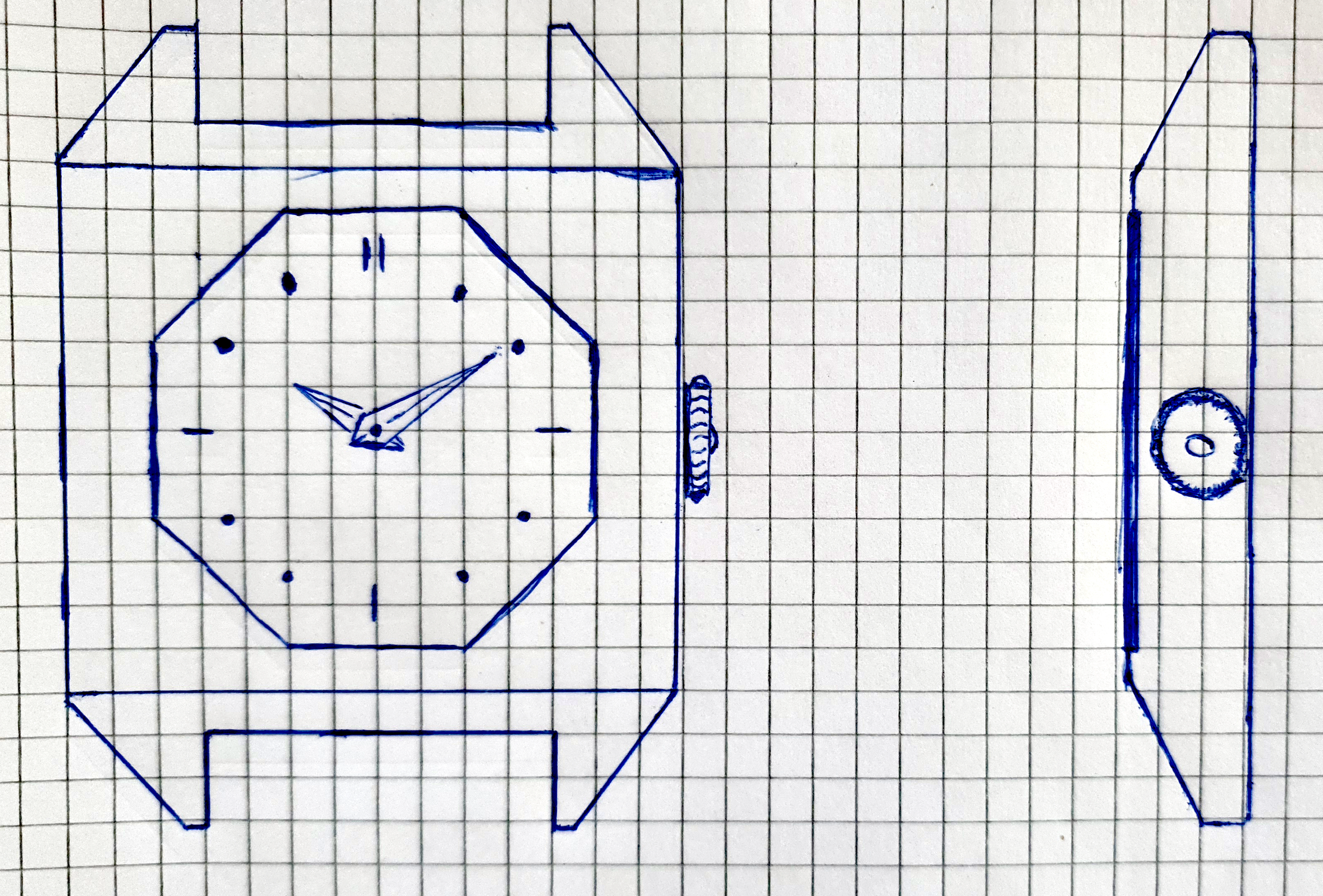
What's this project about?
I’m bothered by waste in general, but I’m really upset by avoidable waste. Like other luxury products, watches produce waste in all parts of the making process. Some is optional, and some is not.
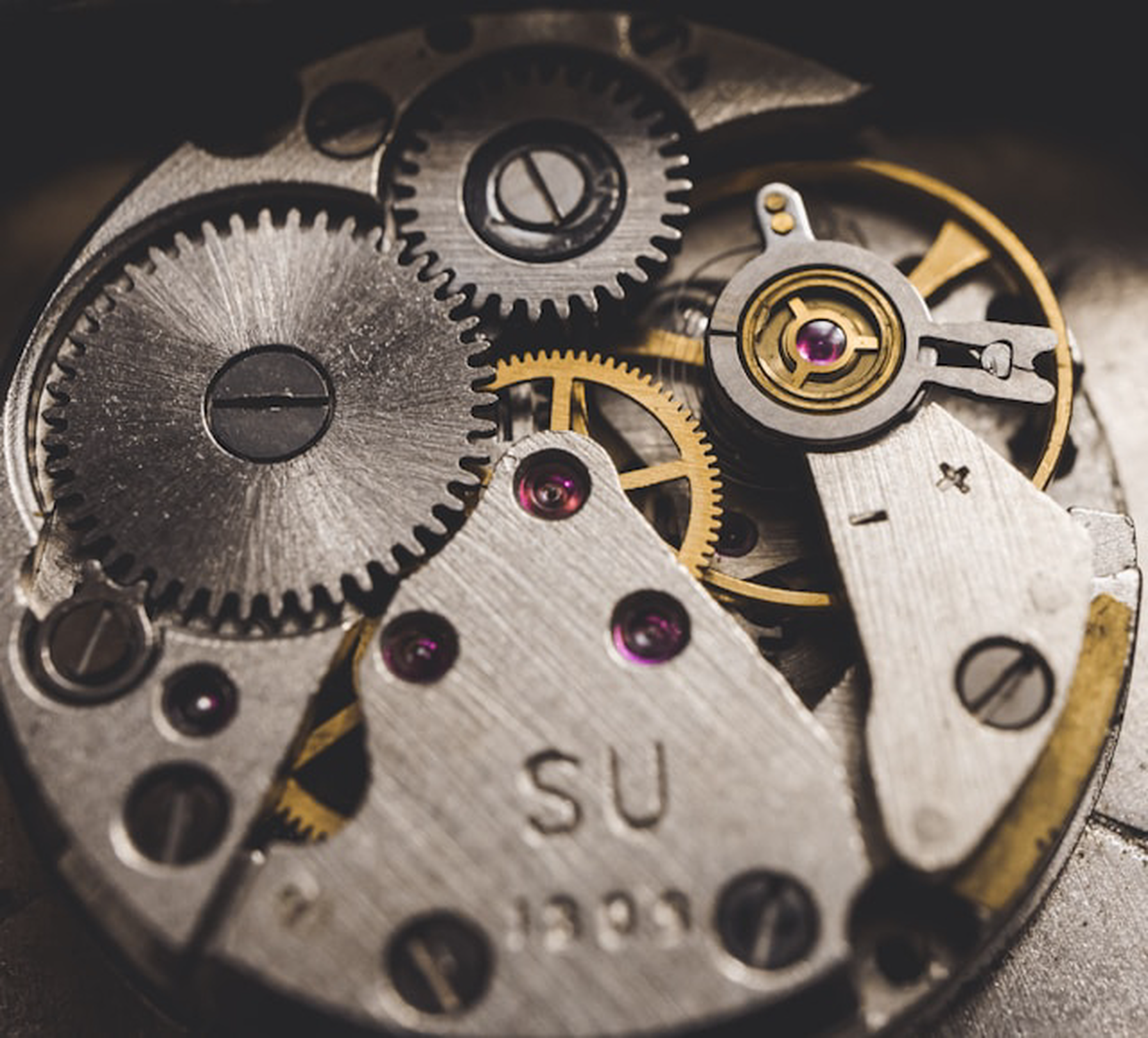
This stock photo is an example of a used vintage mechanical movement, the heart of a mechanical watch. It was most likely manufactured and assembled before 1960, and here are some things I noticed about it:
- The gear train looks like it has all of its teeth
- The hairspring looks like it's unbroken
- The pivots all look intact
- The jewels don't look cracked or chipped.
In most cases, movements like these just need a good cleaning, some minor refinishing, and to be re-timed.
Why is this a problem?
There is a glut of vintage movements like these available on the secondary market, and for one reason or another, they are now orphans. Some of these movements are irreparably damaged, but a lot of them are still functional.
Usually, they get removed from their original cases, which then get sold and melted down for their precious metals. Once this happens, the movements are either sold secondhand and then summarily cannibalized (usually for custom jewelry), or they’re sent straight to the bin.
The problem here isn’t with the jewelry maker or with their living. Instead, the problem is:
- that such an overstock of vintage movements even exists in the first place,
- that they have now been completely alienated from the function they were built for, and,
- that they are now too inconvenient to store.
The modern watch market is built around new innovations, new tech, and new watches with new movements. The old movements get left behind: sometimes there is a good reason, and sometimes there is no reason at all, other than ‘something newer took its place’.
I bought a handful of these movements halfway through my first year of school just so I could have more practice materials at school, and after cleaning them up and maintaining them, I’m quite frankly in love. Since then, I’ve been looking for a way to get them back into action and back onto peoples’ wrists and telling time again.
I’ve just begun my second year of watchmaking school, and I think I’ve found a way. Even though I’m still in school, I’m in a position where I’d like to put my skills to use, and to reverse some of the needless waste which has brought these old movements to market.
What's the plan?
I want to commit to making a small bespoke series of watches using rescued and recommissioned movements. I intend to build ten, including the prototype.
By setting this goal, I want to strengthen my acumen as a watchmaker, to carry a project from beginning to end, and to complete my school program with a bit of extra experience.
Most importantly though, I want to take a direct part in the circular economy now rather than some nebulous ’later’, and to produce a tangible product that is a direct result of it.
Please note:
- I’m not envisioning Vesper as a brand: my intent is to treat it as a one-off series of showcase (or ‘hobby’) pieces.
- This will not be a zero-waste project. Yes, this watch will be built around a rescued vintage movement, but the secondary components around it will be made from new material stock, and some components will be supplier sourced. In the future, I want to incorporate more direct material reclamation, recycling, and in-house production into my projects. However, since I’m still in school and don’t have my own workshop yet, my options are limited. With this in mind, I’m choosing to focus this project around what I do have control over, which is the movement.
Can I get one when it's finished?
While the mission statement above is important, I also want these watches to be worn and loved.
So, sure why not? If I have slots available and you want to reserve one of the finished pieces, contact me directly and we’ll chat.
In exchange, I’ll use my remaining time in school to prototype and get this design built, you will receive the finished watch when it’s done (estimated: October 2027), and you will own a part of my professional journey as a developing watchmaker.
For info on the proposed construction and design of the watch, check out the specsheet and FAQs. You can also check out the updates section to follow the progress of this project.
I’m not the first person to select a recommissioned or rescued movement for a watch series: there are countless others, but they’re often not in the industry limelight.
There’s one in particular that began with a similar idea and has directly inspired me, so it’s only fair to mention him here: His work to date at Semper & Adhuc is built from the AS1012 (the same movement I’ve selected for this project), and he also happens to be a former classmate of one of my watchmaking teachers. His work is evidence that small is beautiful, and it makes me want to make things new again. You made it all the way to the bottom. This is my first time trying to design and build a project, and you cared enough to keep reading. So…Acknowledgement
Colin de Tonnac
You
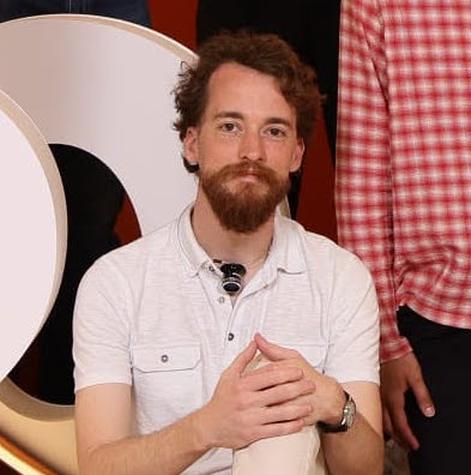
Thank you for supporting me.
If I can make something for you, just know that I want it to be good, and I'd love for you to be a part of it.
-Michael